Everyone’s watching oil. That’s the mistake. With Hormuz closed, the real shock is hitting fertilizer, food, and supply chains. This isn’t just an energy crisis. It’s the early stage of a global food breakdown.
Spring planting was about to begin. Then costs jumped. Fertilizer more expensive. Fuel more expensive. One reason: Hormuz was shut.
…
The real pressure builds somewhere else. Fertilizer.
Strip it down, and the system depends on three things: nitrogen, phosphate, potash. The Gulf plays a central role, especially in the first two. Around 50% of globally traded ureapasses through that region, moving mostly by sea. One company alone, Qatar Fertilizer, produces roughly 5.6 to 6 million tons a year, about 14% of global supply. That flow depends on open routes.
…
A core ingredient in fertilizer, heavily dependent on natural gas. The Gulf produces around 30% of global ammonia, and that production relies on gas flows now under pressure. About 20% of global LNG exportspass through this region. Qatar alone accounts for roughly 19% of the market.
…
Phosphate follows the same logic. Its production depends on sulfur, and about 45% of global sulfur exports move through Hormuz. Disrupt that flow, and prices react quickly. Farmers are left with difficult choices. Use less fertilizer and accept lower yields, or stop planting if the economics no longer hold.
…
Pull the camera back a little further, and the picture widens. It doesn’t stop with food and energy. Qatar produces about 63 million cubic meters of helium a year, nearly a third of global supply. Helium is used in semiconductors. In MRI machines. Disrupt that, and the effects don’t stay in tech. They move into healthcare. The same applies to petrochemicals used in pharmaceuticals. Any shock in oil and gas runs straight into that sector as well.


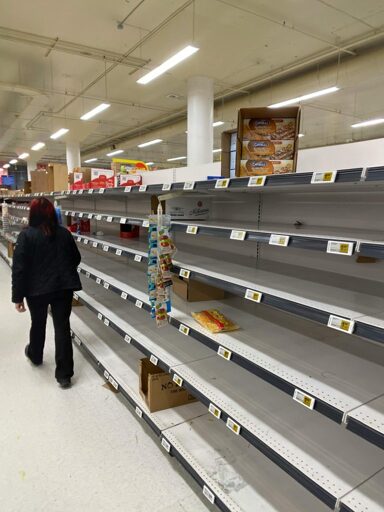
I can’t get view it. Any statement on how bad it is?
…
…
…
…
…
Just as if there was a reason the US didn’t attack Iran directly in the last decades eventhough the theocracy dethroned their puppet…