Until they aren’t being offered anymore. On PC, physical games are practically dead and on console, they are only making up less than 20% of sales at this point (which is why both Sony and Microsoft are offering versions of the consoles without disc drives). Not to mention, there’s often mandatory day-one patches in the tens of gigabytes or (particularly on Switch and Switch 2) the physical media only containing some of the game files, requiring a download to play.
- 34 Posts
- 662 Comments
Joined 3 years ago
Cake day: June 9th, 2023
You are not logged in. If you use a Fediverse account that is able to follow users, you can follow this user.

 4·10 days ago
I agree. I recently watched a video of someone exploring a Waymo servicing point and it was just masses of low-paid workers cleaning and repairing these robo-taxis. What a disappointing future.
Maybe they should ask their AI for ideas on how to make money.
By the way: Why are AI companies still on a hiring spree while at the same time peddling AI as a replacement of high-skill white collar jobs, like software engineering?
Sometimes, the issue is certification, e.g. for aerospace and medical applications - although these systems tend to run on decades-old software anyway (since changes to the software also need to be certified, which rarely happens), so it’s not like this has an actual impact.
Decreasing friction is a problem though. In the past, you needed at least some basic skills to e.g. photoshop a compromising photo of someone (and quite a lot of experience to do so convincingly), whereas current AI tools can do this far better with no skills required.
Also, the market is already oversaturated. It’s not just that there are too many AAA and AA games; Indies are also struggling, because supply vastly exceeds the demand due to thousands of titles that are published on Steam every year alone, most of which are commercial flops. Only someone with a complete lack of understanding of what’s going on in this industry would want more people and more games.
A relative of mine switched to a BEV just a few months ago - KGM Torres EVX, a bargain from South Korea with 462 km (287 mi) WLTP range, which he regularly exceeds - after years of driving plug-in hybrids from Mitsubishi. He obviously could not be happier, given current gas prices (except that the driver’s seat holds up exactly as poorly as on the Mitsubishis). He does not have a wall box, by the way: All of his charging is done through public chargers and a slow wall outlet at work. At between €28 and 36 per full recharge, it’s a very cheap car to drive.
Even when he was driving his prior hybrids, he was barely ever using the internal combustion engine - to the point that the car would occasionally warn him to refresh the gas in the tank - since he was doing almost all of his driving in EV-mode.
They aren’t peddling their products exclusively in America though. I doubt EU customers, courts and regulatory agencies are oblivious to this change.
Reminds me of iOS users (who tend to be financially better off) getting charged more than Android users. Random recent-ish examples, but this goes way back:
https://mashable.com/article/doordash-iphone-android-class-action-lawsuit
 3·6 months ago
Expedition 33
I haven’t tried this game on the Deck yet, so I can’t confirm these work, but have you looked at how other people have achieved 30 fps on protondb?
https://www.protondb.com/app/1903340?device=steamDeck
Another option would be to lower difficulty, if you haven’t already. IIRC, the parry window is much wider on easy.
The friends we asked also gave split opinions
Classic too many cooks problem. Best stick to one person who seems like they know what they are talking about. Don’t look at me, I’m just pretending. ;)
but I’m not sure about ventilation then
The more, the merrier. Map out a clear path for the air to travel through the device, from the least hot to the hottest component and out again. Larger fans are quieter at the same amount of air moved than smaller ones. Cable management gets more important the smaller the case is, so make sure to pick a modular power supply and tuck everything that can be tucked away neatly out of sight and out of the way of the airflow.
Without SteamOS it seems I’d need a keyboard/mouse out for every boot too.
You can configure Steam to immediately launch in Big Picture mode on any operating system it supports. There are many ways of achieving this, but here’s a simple script for Windows:
https://github.com/jazir555/GamesDows
For couch PC gaming, I would also recommend getting one of
 (I have amassed several over the years, for some reason).
I’m also not knowledgable about specs, but I figured when, say, Borderlands 4 is not playable at 4K 60fps, then I could just deal with Full HD 30-40fps, which would be enough.
I would recommend waiting until it’s out and people have thoroughly tested it. Within a few days of it reaching the hands of customers, there should be plenty of videos, articles and forum reports on how well it performs with all sorts of games, including particularly demanding ones like Borderlands 4. Digital Foundry are the best address for this kind of performance analysis.
The closest solution is PS5 Pro or PS6 when it comes out (and they fit on shelf, never checked size)
The PS5 (Pro or not) is absolutely humongous. I would be surprised if the PS6 ends up being any smaller. It’ll probably fit onto your shelf, but not in it.
but, no Steam library then. Or mods, emulation. All in all, it seems I’m in an extremely specific situation where buying SM seems optimal.
Looks like it. This computer will undoubtedly be an emulation powerhouse, just like the Deck. If the price is right and if it doesn’t have any teething issues at launch (which I doubt, given how mature the Deck was right away), then it might just be the ideal PC for you. If it’s pricier than expected for the performance, then you might want to return to me and we can discuss a SFF build as an alternative, if you want.
One thing I would recommend is buying the base model and upgrading storage yourself, since this is likely where Valve will charge more than what it would cost to perform the upgrade yourself. There are no other spec differences between the models and it’s likely that they’ll sell the base model close to cost, like the Deck. Based on what I’ve seen, upgrading storage should be trivially easy, far easier than on the Deck.
Which games are you struggling with on the Deck?
What kind of issues did your friend have building a PC? It’s a rather straightforward process, really. You can make mistakes, of course, but if you prepare your build carefully, maybe get a second or third opinion from people with experience and knowledge, read a tutorial or two, then few things can really go wrong. I’m willing to help with the selection of components and some tips on the building process, if you want (I’ve been building PCs for decades, if that counts).
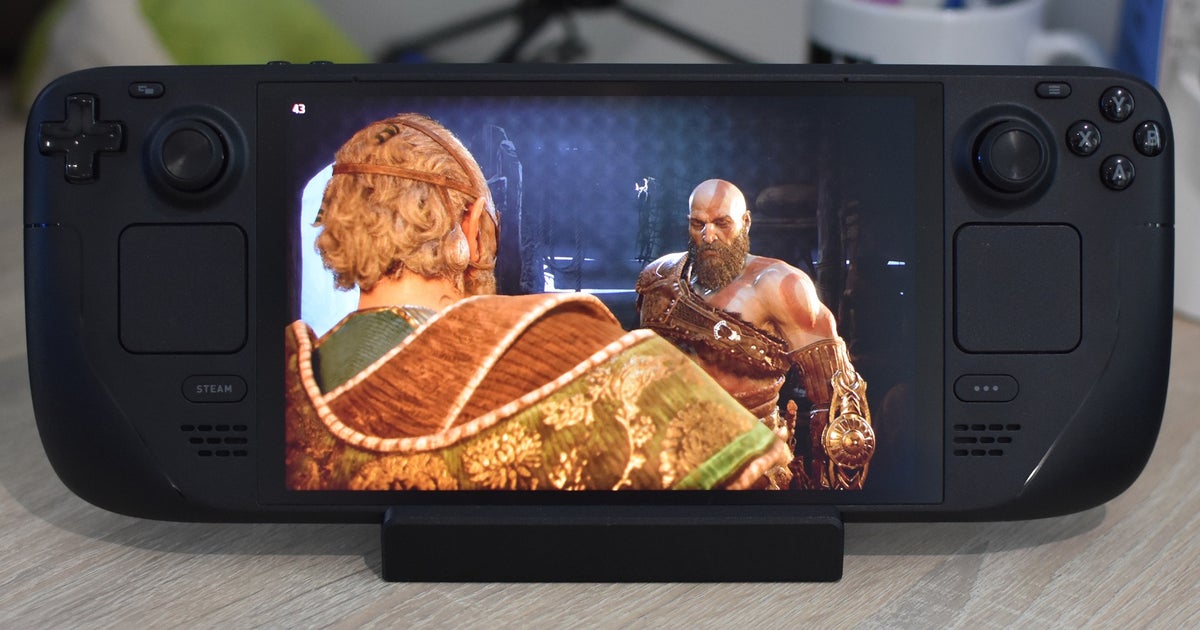
I get the appeal of the “Gabecube” (I hope this name sticks) for you though, but keep in mind that it is a relatively limited system in terms of power, quite a bit below current-gen consoles by current estimates and especially limited by its relatively small amount of VRAM. It should be able to play every Linux-compatible game for now (the most demanding at low settings only), but sooner or later, the limited GPU (which can not be upgraded, unlike on a normal PC), will result in games just not running well enough or not even booting, similar to certain newer games on the Deck. It is considerably more powerful than the Deck though.
It really depends on the price whether or not it’s a good low-end gaming PC. Hardware prices are not exactly ideal at the moment (RAM is the current sticking point, but GPUs aren’t cheap either), so if the Deck manages to be more affordable than a comparable budget build - kind of like the base-model Steam Deck has been a very impressive value proposition - it might be worth it.
There are games, but few exclusives (just 18 the last time I checked). If you want to play modern games and don’t want a PC, it’s fine for that, without really being special in any way. It is a difficult value proposition for owners of the previous gen, since the jump in visual fidelity is much smaller than between prior generations (an inevitability that isn’t Sony’s fault) and since the previous generation is still being at least partially supported and was strongly supported for a very long time. However, over time, most have clearly made the jump and with the release of GTA VI (timed exclusive for PS), the system will see another significant boost.
Mods are not really a factor on consoles. Very few console gamers care about them. Xbox has slightly better support with fewer restrictions, but there are only a handful of games with support (mainly Bethesda RPGs). It clearly hasn’t helped the competition from Redmond.
Both games released and even the N64 port of Daikatana is more fun on original hardware than Star Citizen ever will be.
Sure, but what play is being performed here? These men are more than powerful enough to go against Trump, yet every single one of them is playing the part of the obedient subject to the mighty king. The message of this bizarre play is that Trump is in charge, that he demands, in return of leaving you and your business alone, acts of what can only be described as public debasement.
That’s unsettling for a long list of reasons.
Also for decades, Linux has had awful drivers for graphics cards (among other things) and godawful usability. It’s not like Linux would have taken over the desktop computer market in 1998. Have you ever tried installing a vintage distro? It’s a nightmare.
It can mean that, but it’s also possible that he already had psychological issues. While the entire thing stinks and my first instinct is to assume foul play as well, it’s still important not to jump to conclusions. The reason is simple: If there’s a real case of corporate murder, then people will take it less seriously due to past conspiracy theories.
Yup. One of several reasons why the Shield TV Pro is still the best streaming box. Using a smart TV after having gotten used to this device is painful.
What you’re asking for is a monitor, not a TV. The last TV I’ve seen that is this limited still had a picture tube - and it wasn’t even the last CRT TV I’ve used (we actually had a very late one with HDMI). Regardless of how silly AI features are, there’s a middle ground.
Large corporations, just like any large organization, have significant institutional momentum. I would bet good money that this move was planned for months, if not longer, and was not a reaction to Veilguard underperforming.










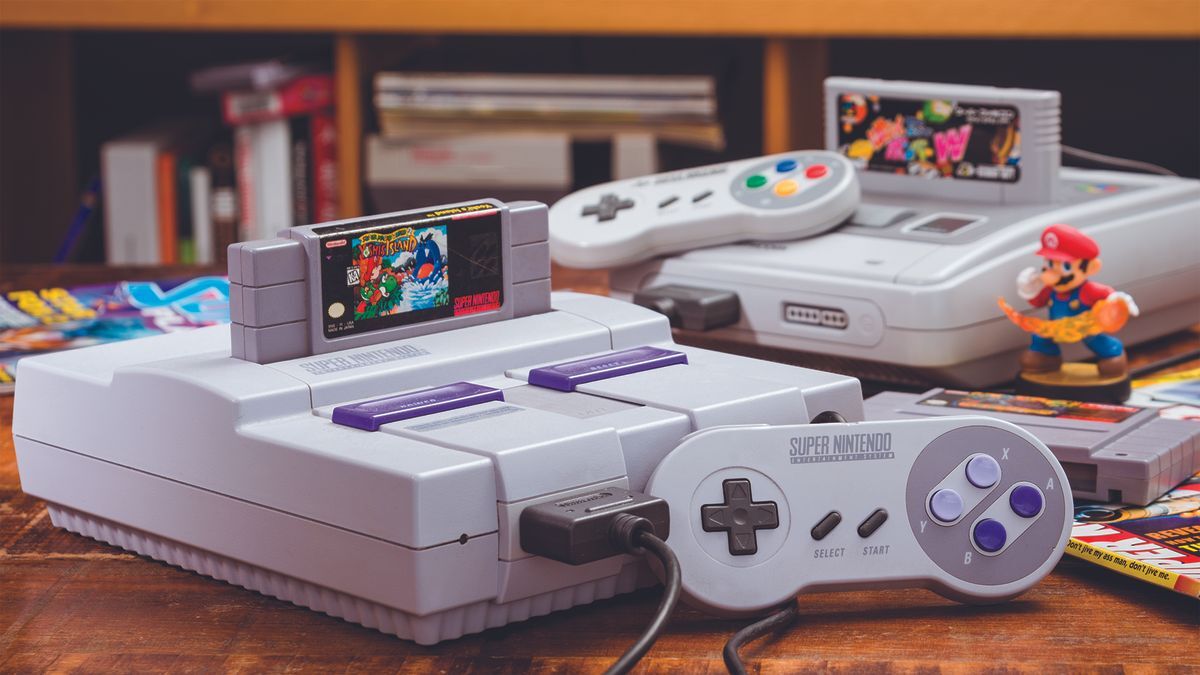

Has this ever been the case? For as long as I’ve been playing games (early 1990s), there have always been buggy games that were clearly not thoroughly playtested. The difference was that back then, patches were either impossible (console - at best there was a silently patched re-release later*) or required PC players to purchase a gaming magazine to get them (if there were any). Perhaps the fact that it’s now easy to distribute even large patches has incentivized developers to adopt a “we’ll fix it eventually” approach, but I have no actual data on this resulting in worse games on average. If there is an actual measurable decrease in software quality in the gaming world, it could just be that the increasing technical complexity of games makes it impossible to detect the majority of bugs these days.
*GTA San Andreas is one of the better known examples of this. There were game-breaking bugs in the original PS2 release that made 100% completion impossible. Only later releases (and ports) had these issues fixed.