

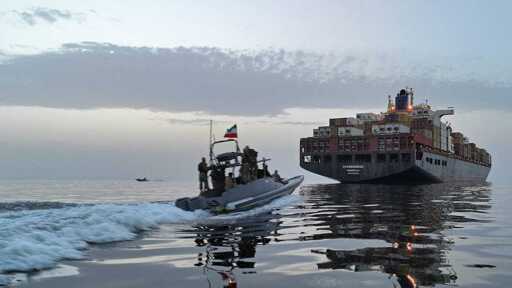
Trump’s three day deadline for Iranian infrastructure explosion passed without incident. Similar statements have also been echoed by Treasury Secretary Scott Bessent, who claimed in a recent post on X that, “IRGC Leaders are trapped like drowning rats in a sewage pipe,” adding that “Iran’s creaking oil industry is starting to shut in production thanks to the U.S. BLOCKADE. Pumping will soon collapse. GASOLINE SHORTAGES IN IRAN NEXT!”
The blockade strategy—which has continued even as the price of Brent crude, the global oil benchmark, briefly rose above $126 in recent days—is based on two assumptions: that economic pressure will make the Iranian government fold to U.S. demands, and that possible shutdowns of Iranian oil export capacity will inflict imminent infrastructure damage on the country that would make capitulation inevitable.
But several Iranian economic experts and individuals with insight into the government’s pre-war planning said that the country had already viewed a blockade as a likelihood and had restructured their oil and gas logistics with the expectation of facing an extended siege.
“Before the war, Iran had emptied a portion of its storage capacity. That’s why Iran had tens of millions of barrels floating on the sea. It already foresaw the situation. Secondly, 70% of Iran’s oil production is used at home and 30% is exported abroad. Iran could re-channel its oil exports through land, through swapping, through many other means,” said Mostafa Khoshchesm, a security analyst in Tehran close to the Iranian government. “That they [the U.S. government] believe that they can fill Iran’s storage capacity with maximum oil in two to three days or one to two weeks is totally wrong.”