Again, the amount of current passed depends only on the voltage
Electrically, current depends on voltage and resistance/impedance. In practice, (and most importantly to this discussion), current draw actually depends primarily on the characteristics of the current limiting devices such as breakers, fuses, etc. Breakers on UK household circuits are designed to allow considerably more power than comparable breakers around the world.
This is the primary factor I am talking about.
Neither are the fuses in the plug, which protect the external wiring.
Those fuses are not needed in Japanese (or North American, or most other) plugs. We don’t need to protect the “external wiring” separately from the household wiring: the household circuit breaker is rated lower than the “external wiring”. Drawing a direct short on the “external wiring” in a UK circuit is not sufficient to trip the UK circuit breaker in the UK distribution panel; they need a secondary current limiter (a fuse) to provide that function.
We don’t need fuses in our plugs, specifically because our household circuit breakers are designed to trip well before your fuses would blow. (We do include fuses in any appliance or device with wiring not rated to full current.)
And lastly, no it isn’t. For one, the child safety shutters on all UK outlets are certainly not contained in a Japanese breaker panel.
The function provided by those shutters is achieved in the Japanese wiring by lower voltage, narrow holes in receptacles (allowable because they don’t need as large a contact to safely carry the lower rated current), a flared base on plugs, protective accessories for outlets in risky locations, and whole-house AFCI/GFCI.
That is utterly irrelevant. Circuit breakers and fuses are designed for the exclusive and sole purpose of protecting the circuit from being overloaded. A 100 amp circuit with a 100 Amp fuse is exactly as safe as a 20 amp circuit with a 20 amp fuse.
Stick your finger in a 20A outlet, and you’ll pull out a burned finger. Stick your finger in a 100A outlet, and you’ll lose your hand, or your life. More power will pass through you before the circuit can be interrupted.
To protect humans from electric shock we use residual current devices, which trip at 10’s of Milli amps. And here’s actually an advantage of a ring circuit. It forces you to place RCD protection on every single outlet in the building, instead of skimping on costs by just putting it on the branches that legally require one, like bathrooms and kitchens.
The power standards that created the need for UK plugs were developed long before RCD/AFCI/GFCI protections were adopted. Those later protections did not influence the decision to use that plug design.
That’s just demonstrably untrue. An individual branch of a household circuits in both the US or Japan can easily be fused at 20A
Our appliance wiring is rated to carry 20A from the receptacle throughout the appliance, or to a secondary current limiter within the appliance. Since the wiring is rated to the 20A the circuit can provide, we don’t need the secondary fuse in the plug. This is part of our appliance wiring standards.
And even if it weren’t a lie, how on earth does the location of the fuse make a difference in safety here ? If it’s in the wall or in the plug, as long as it’s there and does it’s job both would be equally safe.
If you have a 30A outlet, and you plug a cord rated to 20A into it, that cord will be overloaded before drawing 30A. Which means a fault in the appliance might not be capable of tripping the 30A breaker. For safety, you would need the cord to be rated to 30A to ensure the breaker will trip. The UK doesn’t use 30A cords on appliances that only need 2A of protection. They put a 2A fuse in their plug, and use a cord capable of surviving a 2A fault. (In practice, UK cords have about the same rating as US cords; a 20A fuse in the plug would suffice.)
Our breakers are rated at 15 or 20A. We require our cords have to be rated to be able to survive 20A without catching fire for long enough to trip a 20A breaker, even if the device is only expected to draw 2A. We don’t need the secondary current limiter, as the circuit breaker is designed and intended to trip before a fault allows the appliance to catch fire.
In both Japan and America you can buy extension cords rated for 10 or 15A. So no.
Different rating. An extension cord rated for carrying 10A continuously will still survive a 20A fault. The voltage drop through that cord will be out of spec, which is why it is only rated to 10A.
fun fact: European branch circuis, because of the higher voltage that you were raging against in your first comment, can handle more electric load whilst having SMALLER 16A breakers)
Obviously. That has been part of my point the entire time: You use fewer, higher wattage circuits. UK circuits carries more power to pass through your body than a comparable circuit elsewhere in the world. The household wiring standards in the rest of the world are more restrictive than they are in the UK. You are repeating the exact points that I (and others) have been making from the start.
UK ring circuits are fused at 30 Amps.
30A @ 240V in the UK. 16A @220V in the EU. 15/20A @ 120V in North America. 20A @ 100V in Japan. Keep those numbers in mind, assume someone is touching a live wire sticking out of their wall, drop the attitude, and re-read my comments from the very start.
No it isn’t. I literally just told you you can buy 15A rated extension cords in Japan in the comment you’re replying to. 15, is in fact less than 20, just fyi. Are you deliberately ignoring half of what I wrote ?
I covered that. Different rating. That 15A cord will survive a 20A fault. Its rated at 15A because the voltage drop will be out of spec at 20A draw, not because it will be a fire hazard at 20A. You will be able to get enough current through that 15A cord to trip the 20A breaker. You might not be able to get 20A through a 5A cord before the cord catches fire.
My point is that UK appliances are specifically not designed to trip UK breakers in a fault. US devices are.
In every jurisdiction where fuses are not required in plugs, appliance standards require the appliance to be able to trip the household breaker. This is a fundamental concept of electrical safety.
And the resistance of your body is way to high to pass more than a few hundred milliamps anyway.
That’s actually false. You’re conflating the resistance of “skin” with the resistance if the “body”. Once you burn away that skin, your internal resistance drops substantially.
Nope, again completely untrue. Breakers are only required to trip if the circuit becomes overloaded.
Breakers are only required to trip if the circuit is overloaded. That part is correct.
The internal resistance of drastically undersized wiring may not be capable of passing sufficient current to overload the household breaker. And yet, pretty much the entire world (except the UK) doesn’t require fuses on their plugs. The unfused power cords for those non-UK appliances are either a fire hazard OR those cords are required to be able to carry sufficient current to trip the current limiter without catching fire. The latter is, indeed, the case. This is a big part of UL, CSA, CE, and other electrical certification standards around the world.
(namely people like you thinking it’s fine to plug a 15A cable into a 20A circuit without external fusing or current limiting),
That’s actually part of NEC code applicable in the US and Canada, and I’m not going to delve too far into it, as it really pisses me off. Basically, there is no functional difference between our 15A and 20A components. The standards needed for a component to carry 15A in North America are the same as the standards needed for it to carry 20A. Effectively, our 15A components have a safety margin 5A greater than that of our 20A components.
The historic and technical distinctions for this are well outside the scope of this discussion, and I think it is, indeed, moronic. But yes, technically, we can indeed use certain 15A-rated components on a circuit protected by a 20A breaker.
And in fact, the fused plugs actually make it way MORE likely for something to trip on a device side fault in the UK, because the current only has to be like 3Amps to kill the fuse. In every other place of the world, current needs to be at least 16A before anything trips.
Here again, you’re demonstrating my exact point, despite claiming that what I am saying is “completely untrue”: The rest of the world builds its appliances to tolerate at least that 16A fault. For the UK to use that exact same manner of protection, they would need to build their appliances to tolerate a 30A fault. The same appliance would need a much heavier power cord in the UK than in the EU.
Since no rational person would want to overbuild each and every appliance to be able to tolerate a 30A fault, they included a fuse in their plug. That plug, unneeded in the rest of the world, is an essential component in the UK. That plug is what allows the UK to be able to safely use the world’s 16A appliances on UK 30A breakers.
(No, the rest of the world doesn’t need 16A before “anything” trips. The rest of the world includes their fuses inside the appliance, immediately after the cord rather than on the plug end.)


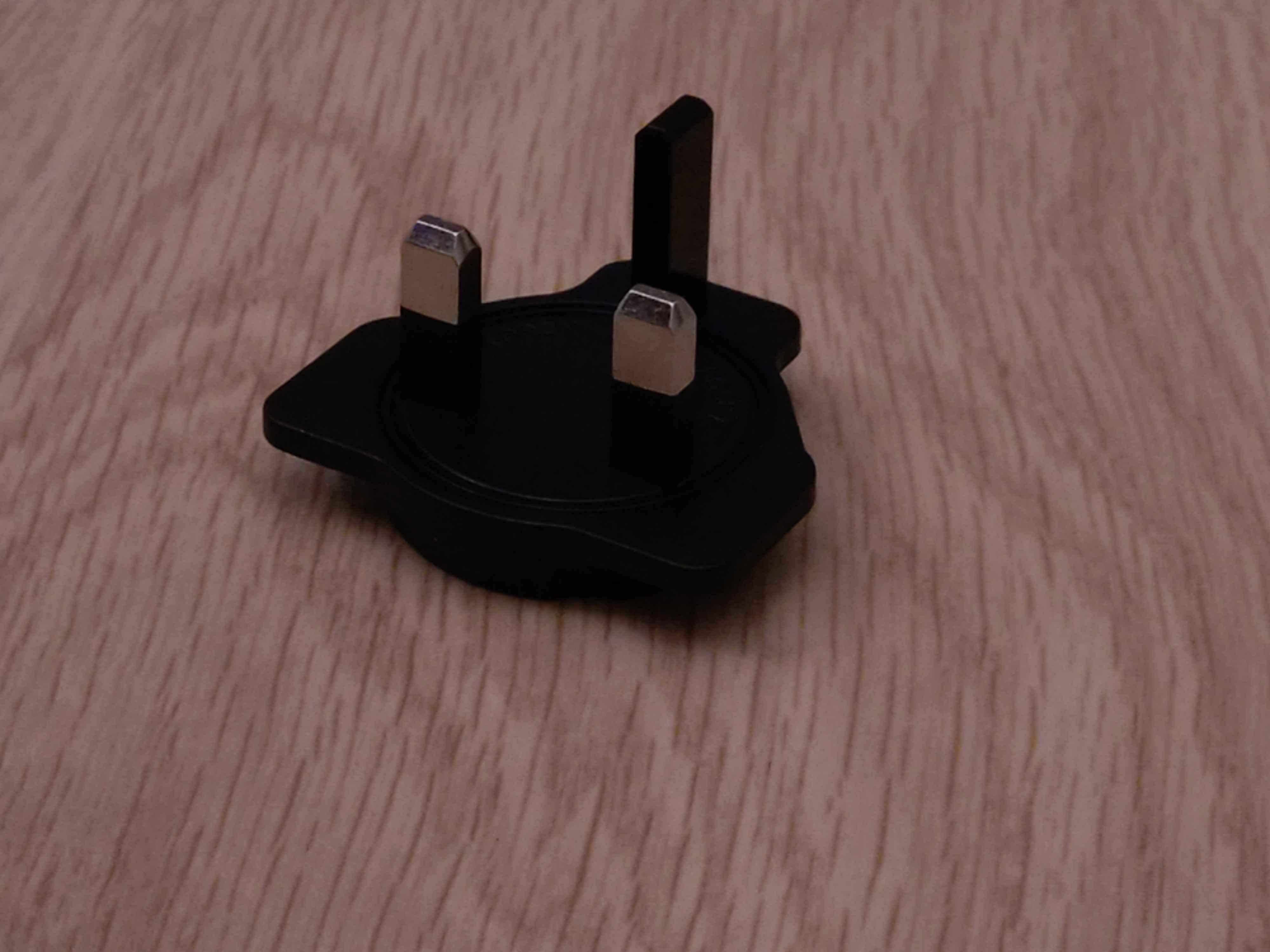
Removed by mod
Electrically, current depends on voltage and resistance/impedance. In practice, (and most importantly to this discussion), current draw actually depends primarily on the characteristics of the current limiting devices such as breakers, fuses, etc. Breakers on UK household circuits are designed to allow considerably more power than comparable breakers around the world.
This is the primary factor I am talking about.
Those fuses are not needed in Japanese (or North American, or most other) plugs. We don’t need to protect the “external wiring” separately from the household wiring: the household circuit breaker is rated lower than the “external wiring”. Drawing a direct short on the “external wiring” in a UK circuit is not sufficient to trip the UK circuit breaker in the UK distribution panel; they need a secondary current limiter (a fuse) to provide that function.
We don’t need fuses in our plugs, specifically because our household circuit breakers are designed to trip well before your fuses would blow. (We do include fuses in any appliance or device with wiring not rated to full current.)
The function provided by those shutters is achieved in the Japanese wiring by lower voltage, narrow holes in receptacles (allowable because they don’t need as large a contact to safely carry the lower rated current), a flared base on plugs, protective accessories for outlets in risky locations, and whole-house AFCI/GFCI.
Removed by mod
Stick your finger in a 20A outlet, and you’ll pull out a burned finger. Stick your finger in a 100A outlet, and you’ll lose your hand, or your life. More power will pass through you before the circuit can be interrupted.
The power standards that created the need for UK plugs were developed long before RCD/AFCI/GFCI protections were adopted. Those later protections did not influence the decision to use that plug design.
Our appliance wiring is rated to carry 20A from the receptacle throughout the appliance, or to a secondary current limiter within the appliance. Since the wiring is rated to the 20A the circuit can provide, we don’t need the secondary fuse in the plug. This is part of our appliance wiring standards.
If you have a 30A outlet, and you plug a cord rated to 20A into it, that cord will be overloaded before drawing 30A. Which means a fault in the appliance might not be capable of tripping the 30A breaker. For safety, you would need the cord to be rated to 30A to ensure the breaker will trip. The UK doesn’t use 30A cords on appliances that only need 2A of protection. They put a 2A fuse in their plug, and use a cord capable of surviving a 2A fault. (In practice, UK cords have about the same rating as US cords; a 20A fuse in the plug would suffice.)
Our breakers are rated at 15 or 20A. We require our cords have to be rated to be able to survive 20A without catching fire for long enough to trip a 20A breaker, even if the device is only expected to draw 2A. We don’t need the secondary current limiter, as the circuit breaker is designed and intended to trip before a fault allows the appliance to catch fire.
Different rating. An extension cord rated for carrying 10A continuously will still survive a 20A fault. The voltage drop through that cord will be out of spec, which is why it is only rated to 10A.
Obviously. That has been part of my point the entire time: You use fewer, higher wattage circuits. UK circuits carries more power to pass through your body than a comparable circuit elsewhere in the world. The household wiring standards in the rest of the world are more restrictive than they are in the UK. You are repeating the exact points that I (and others) have been making from the start.
30A @ 240V in the UK. 16A @220V in the EU. 15/20A @ 120V in North America. 20A @ 100V in Japan. Keep those numbers in mind, assume someone is touching a live wire sticking out of their wall, drop the attitude, and re-read my comments from the very start.
Removed by mod
I covered that. Different rating. That 15A cord will survive a 20A fault. Its rated at 15A because the voltage drop will be out of spec at 20A draw, not because it will be a fire hazard at 20A. You will be able to get enough current through that 15A cord to trip the 20A breaker. You might not be able to get 20A through a 5A cord before the cord catches fire.
My point is that UK appliances are specifically not designed to trip UK breakers in a fault. US devices are.
In every jurisdiction where fuses are not required in plugs, appliance standards require the appliance to be able to trip the household breaker. This is a fundamental concept of electrical safety.
That’s actually false. You’re conflating the resistance of “skin” with the resistance if the “body”. Once you burn away that skin, your internal resistance drops substantially.
Removed by mod
Breakers are only required to trip if the circuit is overloaded. That part is correct.
The internal resistance of drastically undersized wiring may not be capable of passing sufficient current to overload the household breaker. And yet, pretty much the entire world (except the UK) doesn’t require fuses on their plugs. The unfused power cords for those non-UK appliances are either a fire hazard OR those cords are required to be able to carry sufficient current to trip the current limiter without catching fire. The latter is, indeed, the case. This is a big part of UL, CSA, CE, and other electrical certification standards around the world.
That’s actually part of NEC code applicable in the US and Canada, and I’m not going to delve too far into it, as it really pisses me off. Basically, there is no functional difference between our 15A and 20A components. The standards needed for a component to carry 15A in North America are the same as the standards needed for it to carry 20A. Effectively, our 15A components have a safety margin 5A greater than that of our 20A components.
The historic and technical distinctions for this are well outside the scope of this discussion, and I think it is, indeed, moronic. But yes, technically, we can indeed use certain 15A-rated components on a circuit protected by a 20A breaker.
Here again, you’re demonstrating my exact point, despite claiming that what I am saying is “completely untrue”: The rest of the world builds its appliances to tolerate at least that 16A fault. For the UK to use that exact same manner of protection, they would need to build their appliances to tolerate a 30A fault. The same appliance would need a much heavier power cord in the UK than in the EU.
Since no rational person would want to overbuild each and every appliance to be able to tolerate a 30A fault, they included a fuse in their plug. That plug, unneeded in the rest of the world, is an essential component in the UK. That plug is what allows the UK to be able to safely use the world’s 16A appliances on UK 30A breakers.
(No, the rest of the world doesn’t need 16A before “anything” trips. The rest of the world includes their fuses inside the appliance, immediately after the cord rather than on the plug end.)
Removed by mod
popcorn.michaeljackson